Collecting for the Nintendo 64: A Practical Guide
Updated August 22, 2026
The N64 has a small library by modern standards, which makes it one of the few consoles where completing a full regional set is a realistic goal. The difficulty is not finding the games, it is finding them in a condition worth owning.
A small library is a real advantage
Compared with a disc-based console of the same era, the N64 library is modest. That changes the whole shape of collecting for it: a full regional set is a finite, countable target rather than an abstraction, and you can see the end from the beginning.
It also means the prices are better understood. With fewer titles and a long-established collector base, there is much less room for a game to be quietly scarce and unnoticed, and correspondingly less chance of finding a bargain nobody has spotted. What you gain in achievability you lose in treasure hunting.
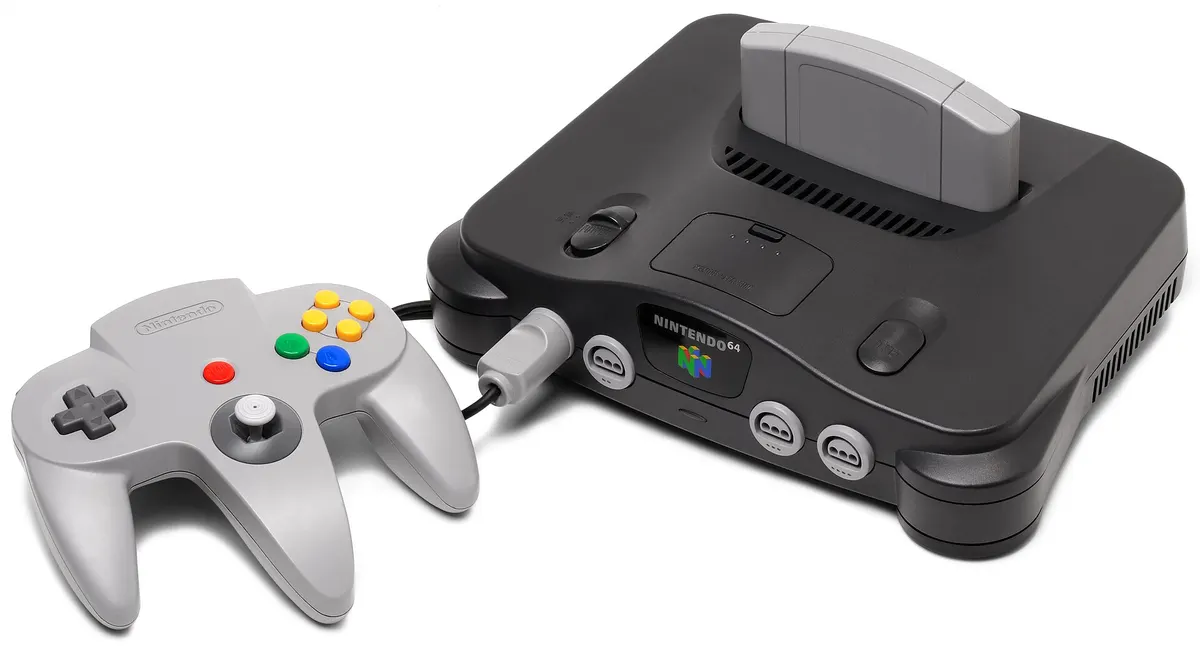
Why complete-in-box is the whole difficulty
N64 games shipped in cardboard boxes with an internal tray and a manual. Cardboard does not survive childhood. The overwhelming majority of surviving copies are loose cartridges, which is why a boxed copy of an ordinary game can cost many times what the cartridge alone does.
This is the single most important thing to understand before setting a budget. A "complete N64 set" and a "loose N64 set" are separated by an order of magnitude in cost and by years in time. Decide which one you are actually collecting before you start, because switching halfway is expensive.
When buying boxed, look at the box corners and the tray. Crushed corners and a missing or replaced tray are extremely common and materially affect value, and photographs rarely show either clearly. Ask for a picture of the box standing on its own.
Checking a cartridge properly
Start with the label. Original labels are crisply printed with sharp edges and sit flush in the recess; a fuzzy label, one that is slightly the wrong size, or one that has been applied over another is the clearest warning sign you will get from across a table.
Then look at the contacts through the opening. Light corrosion looks like dulling or green tinting and usually cleans up; heavy pitting does not. Finally, check the shell screws. N64 carts use a security screw, and a standard Phillips screw in that hole means the cartridge has been opened, which is worth knowing even if the reason was innocent.
Save batteries are a running cost, not a defect
Many N64 games store saves on a battery-backed chip inside the cartridge. Those batteries are decades old. A dead battery does not damage the game and does not mean you have been sold something faulty, it simply means the cartridge will no longer remember a save.
Treat it as maintenance rather than a fault. It is a cheap, well-documented repair, and a seller disclosing a dead save battery is being straight with you. What you should be wary of is a listing that claims a battery-backed game "saves fine" without saying when that was last tested.
Regions, and the cartridge shape that stops you
The N64 is region-locked, and the cartridge slot is physically shaped differently between regions, so an American cartridge will not fit a Japanese console without modification. Japanese cartridges also use a different shell, which makes them easy to identify on sight.
For a collector this means region is not an afterthought, it is part of what the item is. Our own catalog holds separate entries for the North American, Japanese and PAL releases of an N64 game precisely because they are different physical products, and a collection record that flattens them into one loses the distinction you paid for.
Set a target and track against it
Because the library is finite, an N64 collection is one of the few where a completion percentage is genuinely meaningful rather than decorative. Knowing you are at seventy per cent of a regional set is a real answer, and it changes what you buy next.
Retro Collection Index measures completion against our own catalog for the console, records condition per copy so a loose and a boxed copy are distinct, and values each of them separately. Name the denominator and the number means something.