How to Organize and Catalog a Video Game Collection
Updated October 7, 2025
A collection you cannot see clearly is a collection you will buy duplicates for and under-insure. A good catalog fixes both. Here is a system that scales from fifty games to five thousand.
Record the same fields for every game
Consistency is what makes a catalog useful. For every game, capture: title, console, region, condition (loose/CIB/sealed), what you paid, the date you bought it, and any notes. Add a photo when you can. It is your proof of condition for insurance and your memory jog when a title is ambiguous.
The fastest way to keep it consistent is to log games as they arrive rather than in occasional marathon sessions. Scanning a barcode removes almost all of the typing, which is the friction that makes people stop cataloging.
Organize primarily by console
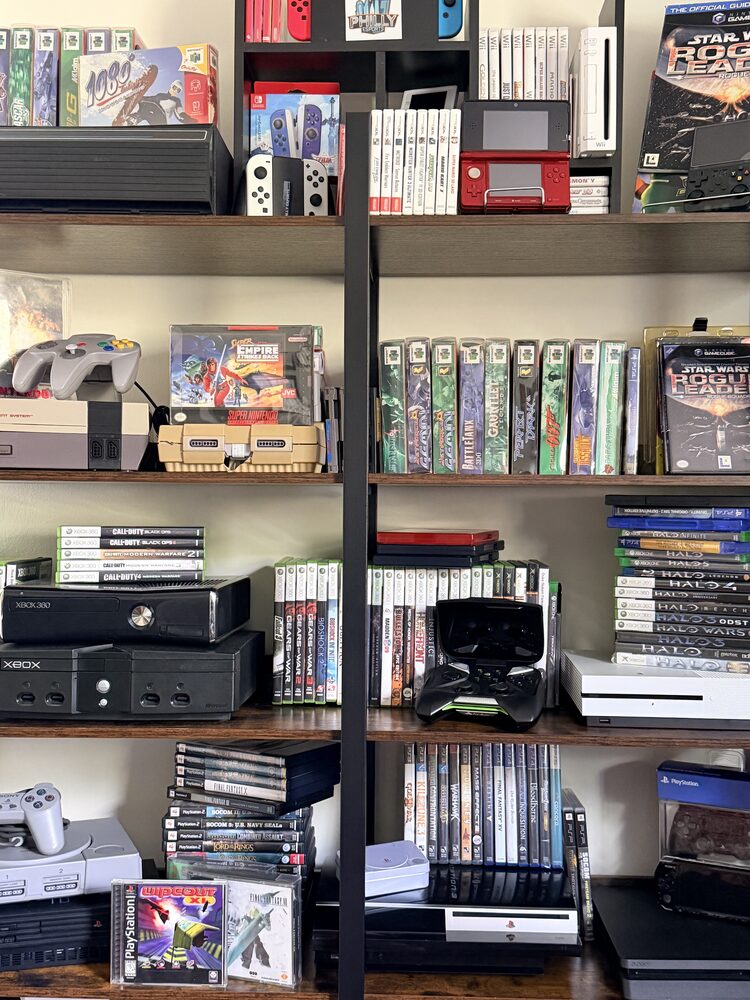
Most collectors think in terms of systems ("my N64 shelf," "my PlayStation library"), so organizing your catalog by console mirrors how you already shop and display. It also makes completion goals natural: you can see exactly how many of a system’s games you own versus the total.
The same title released on multiple systems should be tracked as separate entries per console, because they are separate physical objects with separate values. A game on the SNES and its port on the Genesis are two different collectibles.
Track completion and gaps
The most motivating view in any collection is progress toward a goal. Knowing you own 143 of 296 licensed N64 releases turns a pile of games into a quest. A good catalog shows both what you own and what is missing, so your next purchase is a deliberate step toward completion rather than an impulse.
Keep a wanted list for the gaps. It stops duplicate buying, it gives you a shopping list for conventions and marketplace alerts, and paired with price tracking it tells you when a target game gets cheaper.
Keep values current without the busywork
Retro prices move, so a catalog with values you typed in once is out of date within months. The point of tracking value is to keep it live: your total worth, per-console and per-condition breakdowns, and gains versus what you paid, all refreshed from real marketplace data.
Retro Collection Index is built around this exact workflow: organize by console, add games by scan or photo, set condition per copy, track owned versus missing with completion percentages, and watch a live valuation update itself. Your data stays yours: import from a spreadsheet to get started and export to CSV anytime.