Video Game Grading Explained: WATA, CGC, and Sealed Copies
Updated January 21, 2026
Graded games (sealed copies sealed again in a hard plastic case with a number on them) can command huge premiums. Here is what grading actually means and when it is worth considering.
What grading is
Professional grading is a third-party service that authenticates a game, assesses its condition against a consistent standard, encapsulates it in a tamper-evident case, and assigns a numeric grade. For sealed games the grade reflects box condition and the quality of the factory seal; graders like WATA and CGC are the best known in the hobby.
The value of grading is trust and standardization. A graded, authenticated copy removes two of a buyer’s biggest fears (is it real, and is it really in that condition), which is why high grades on desirable titles trade far above raw copies.
How the numbers work
Sealed grades typically combine an overall box grade (on a scale up to around 10) with a separate seal rating (often a letter grade). A 9.8 A++ means a near-perfect box with a pristine, correct seal; small differences in these numbers can mean large differences in price on sought-after games.
Because the scale is granular and demand concentrates at the top, the market for graded games is steep: the jump from a 9.4 to a 9.8 on a popular title can multiply the price. This is why grading is closer to investing than playing.
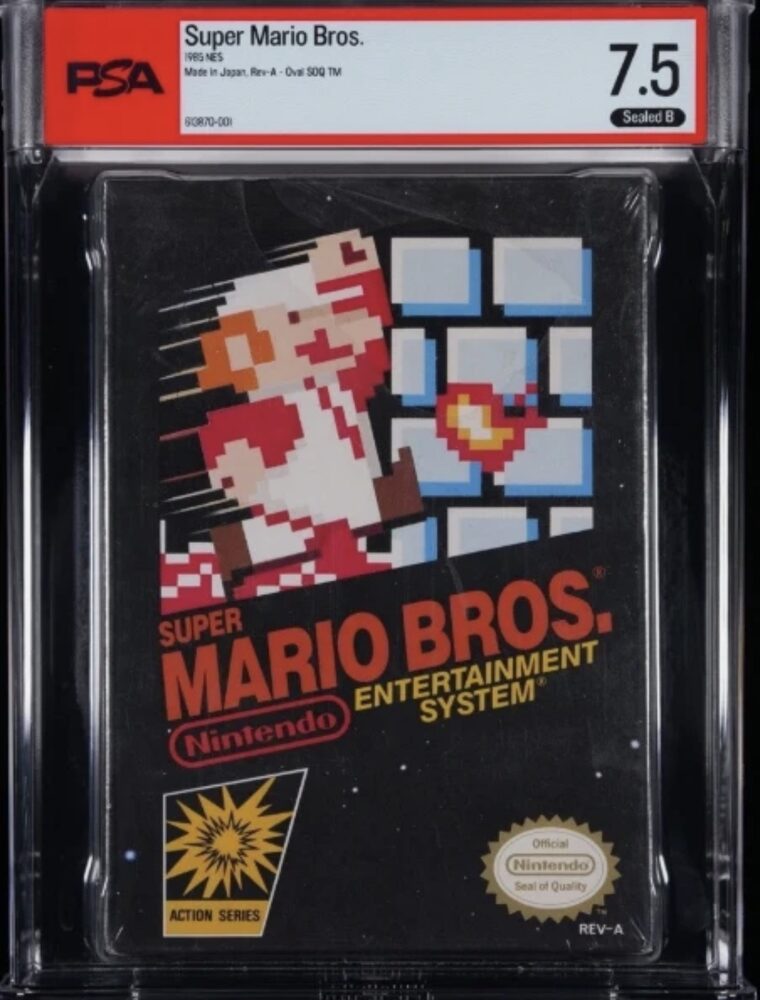
Is grading worth it?
Grading costs money and takes time, so it only makes sense when the graded premium comfortably exceeds those costs, generally for genuinely desirable, high-condition sealed or mint copies. Grading a common loose cartridge almost never pays off.
Grading is also irreversible in spirit: a graded case is meant to stay sealed, so you are choosing to treat that copy as a collectible artifact rather than a game to play. For most collectors, only a small handful of top-tier pieces are worth grading, if any.
Tracking graded copies
A graded copy is its own condition tier, well above raw sealed. When you catalog one, record the grader and grade so its value is not confused with an ordinary sealed or CIB copy. The difference can be enormous.
Retro Collection Index treats each copy separately, so a graded piece and a loose playing copy of the same game can live side by side in your collection with their own conditions, notes, and values.